

Understanding RTP: Its Meaning and Misconceptions
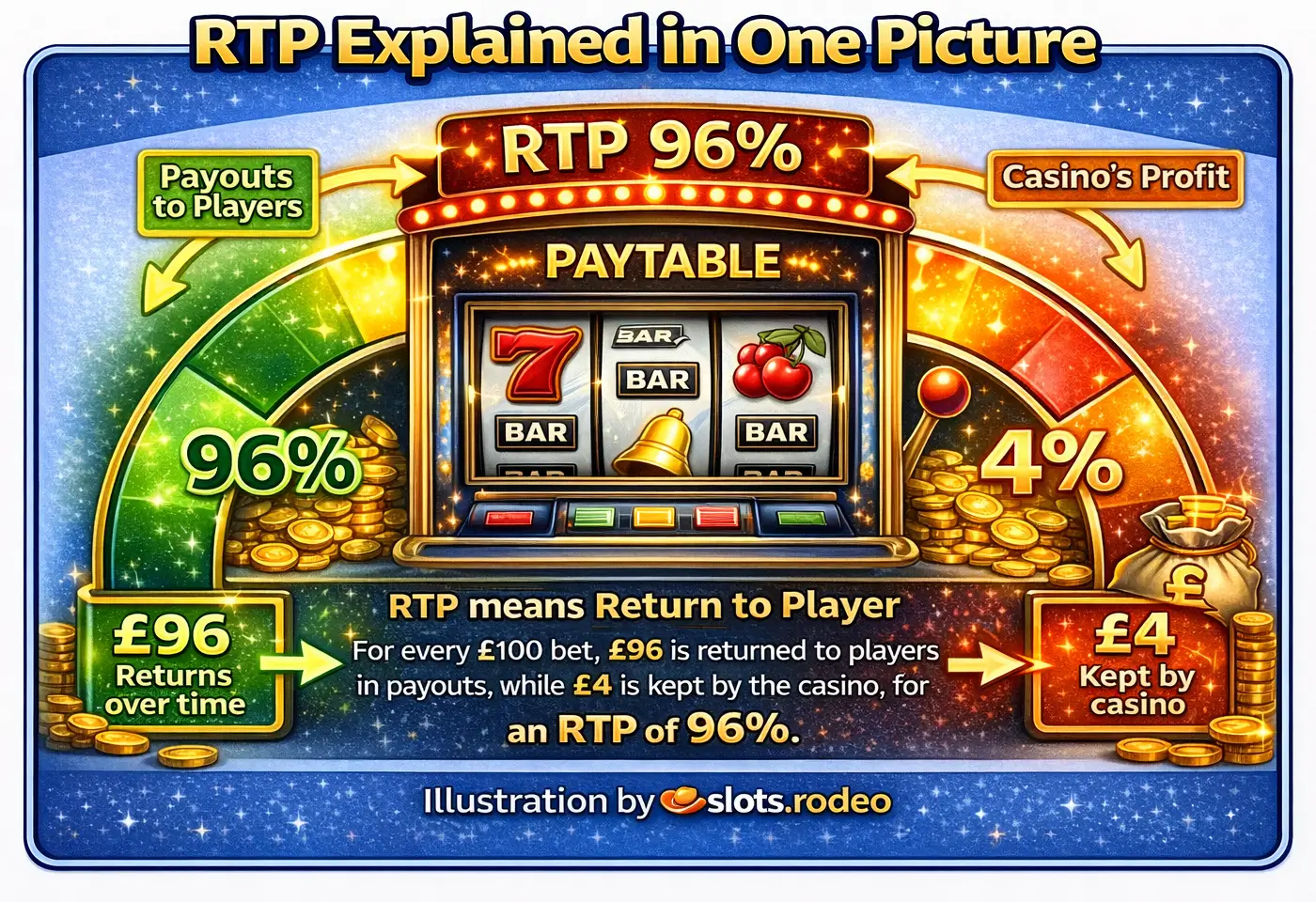
RTP (Return to Player)refers to the theoretical share of total stakes returned to playersover a significant number of spins.A slot with96% RTPis designed so that, in the long term, around 96% of the total wagered amount is returned to players, while the rest constitutes the house edge.
RTP doesnottell you:
- whether you'll win in your upcoming session
- how frequently you will trigger bonuses
- the size of typical wins
- and the overall volatility of the game.
This is where volatility plays a crucial role.
Bonus Contribution: Understanding Where RTP Can Vary
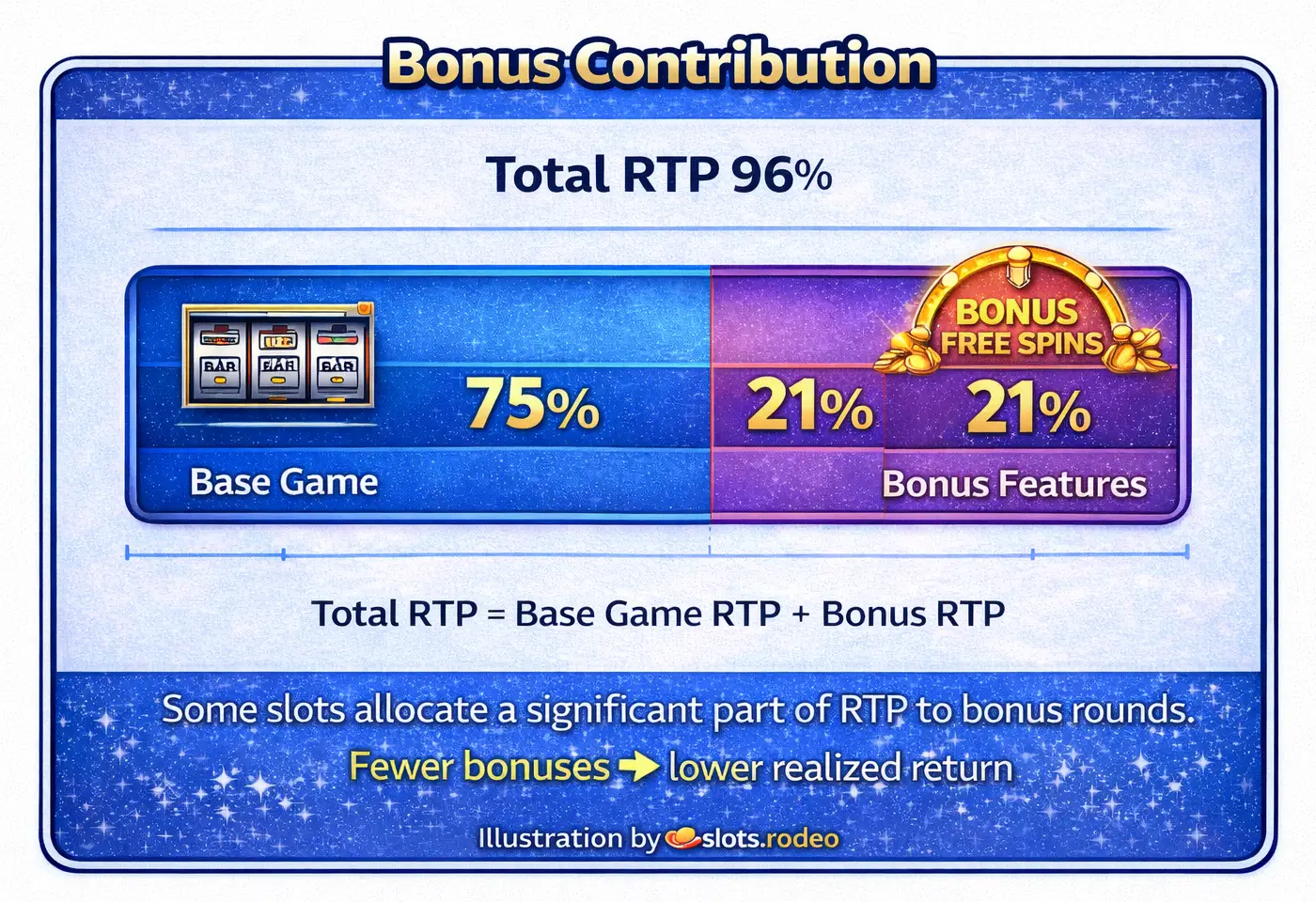
Numerous slots allocate their theoretical returns acrossbase game payoutsandand bonus features(such as Free Spins, bonus rounds, respins, etc.). If a significant portion of RTP is assigned to bonuses, the base game might feel less rewarding during shorter play sessions, as many of the higher-return outcomes are found within the bonus features. This explains why two slots with similar RTP can provide different experiences.
Multiple RTP Versions: Identical Slots May Not Always Feature the Same RTP
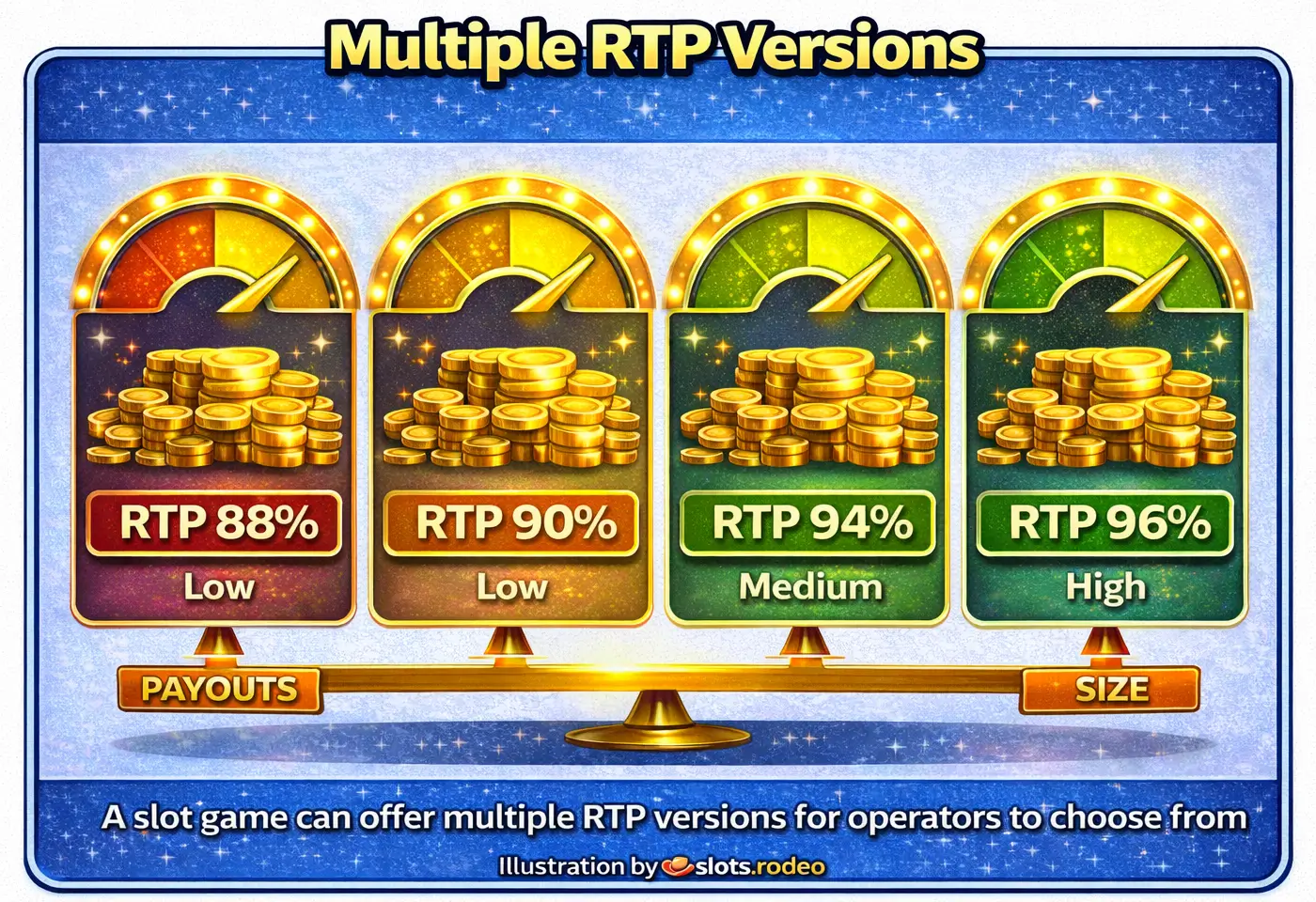
Some slot games are launched withvarious RTP configurations.The version available to a player may depend on the operator's configuration of the game. As a player:
- Review the slot'sinfo panel / paytableto find the RTP value shown in the client.
- Consider the in-game value displayed as the applicable one for that particular game session.
- Only compare RTP when examining the same RTP version(and preferably within the same operator context).
Defining Volatility: Win Frequency Versus Win Size
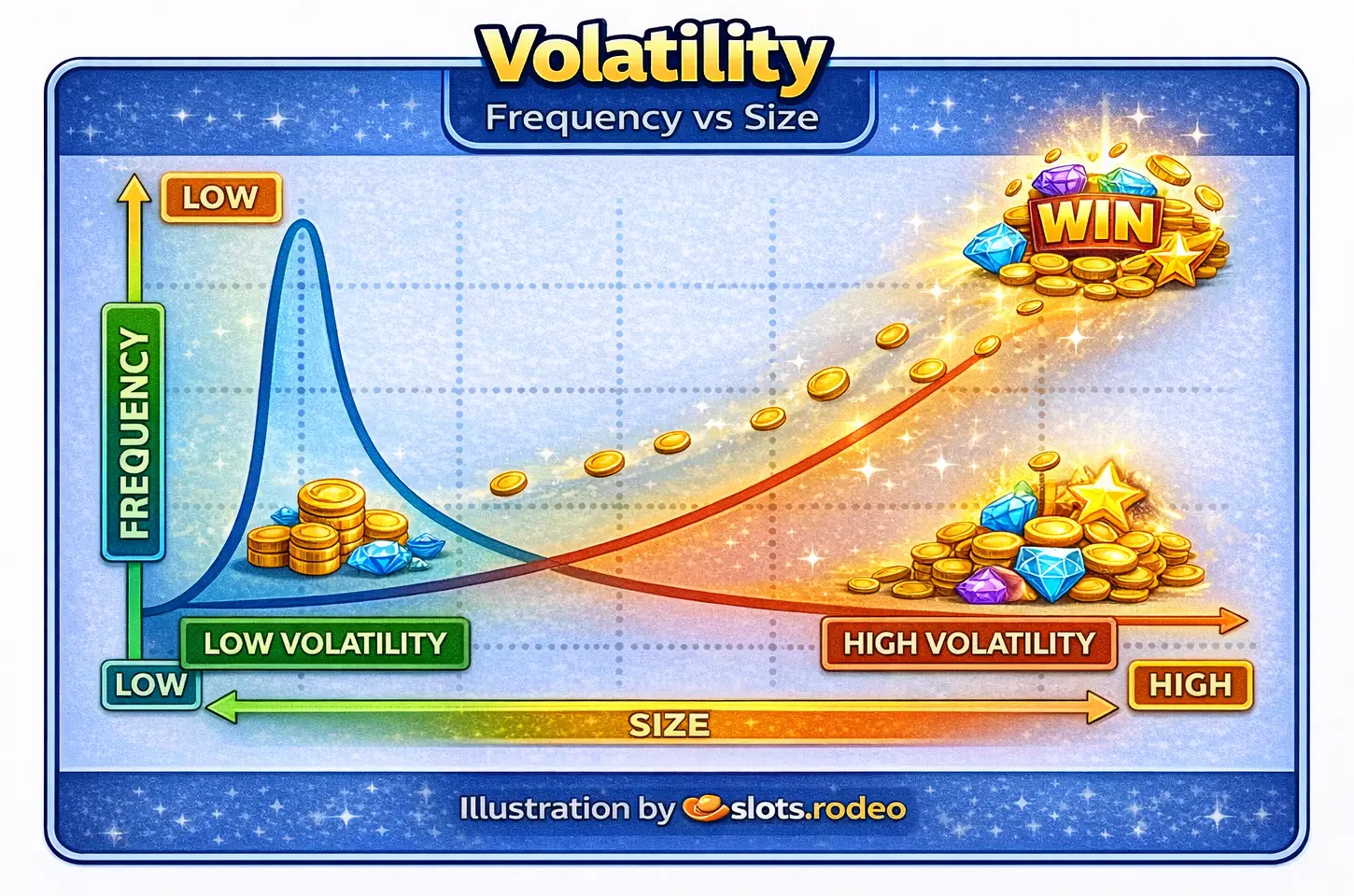
Volatilitydescribes how a slot distributes payouts:
- Low volatility:wins tend to be more frequent, but typically smaller.
- High volatility:wins tend to be less frequent, but can be larger.
- Medium volatility:somewhere between the two.
Volatility changes the "smoothness" of your balance over time, how often you see wins and features, and how likely a session is to include long dry spells or sharp swings. Volatility doesnotautomatically change RTP.
RTP vs Hit Rate vs Max Win
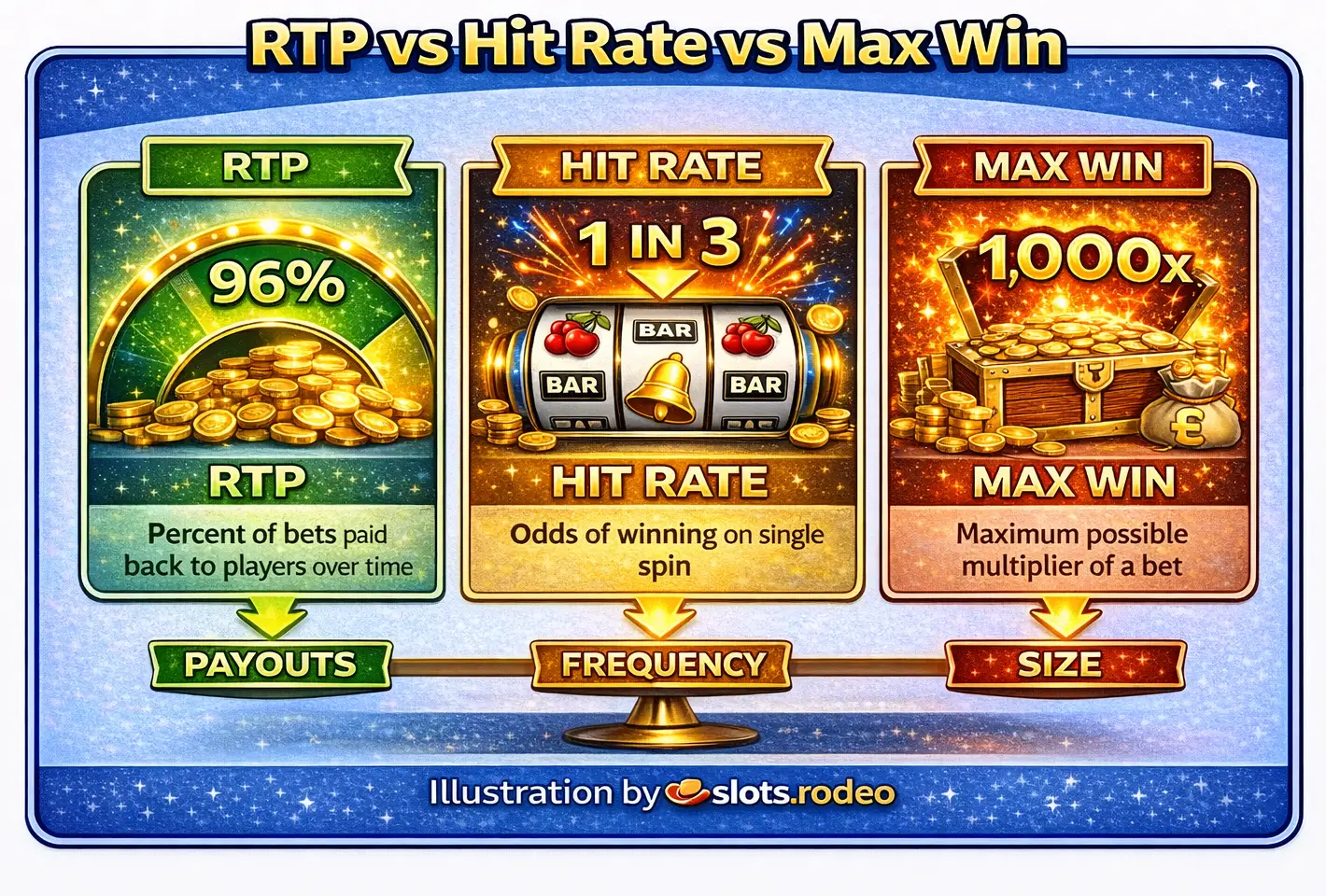
| Metric | What It Describes | What It Affects | Important Note |
|---|---|---|---|
| RTP | Long-run return as % of total bets | Expected return over time (theoretical) | Not a session guarantee |
| Hit rate | How often a spin returns any win | Win frequency per spin | High hit rate can still come from many tiny returns |
| Max win | Maximum possible payout (Xx bet) | Ceiling of potential outcomes | Tells you what's possible, not what's likely |
RTP
Hit rate
Max win
A Practical Way to Compare Two Slots
- Confirm the RTP shown in the gameuse the in-game info/paytable. If multiple RTP versions exist, compare within the same version range.
- Check volatility labelingLow / Medium / High is a coarse label but still useful. If not shown, look at feature intensity and max win as signals.
- Identify where the return is concentratedis the slot bonus-driven? Does the base game have meaningful payouts?
- Note max win and core feature designhigh max win often pairs with higher variance structures.
- Match to your session goalsteadier sessions => lower volatility and less bonus dependency; higher upside => higher volatility.
Common Misconceptions
- "Higher RTP guarantees profit."
RTP is a theoretical long-run average. It doesn't guarantee a positive result in a single session. - "High volatility pays more."
High volatility changes distribution (rarer bigger wins). It doesn't automatically increase RTP. - "Low volatility is always safer."
Low volatility means smaller, more frequent wins - but you can still lose. It's about distribution, not certainty. - "RTP changes during a session."
RTP is a modeled theoretical return over long play. Short-term swings are expected and don't indicate RTP is "currently higher" or "lower". - "A slot is 'due' to pay because it's been cold."
Modern slots use RNG-based outcomes per spin. Past outcomes don't create a "due" state.
Key Takeaway
- RTPis the theoretical long-run return percentage.
- Volatilitydescribes how that return is distributed across outcomes.
- Two slots can share the same RTP and still feel completely different if one is bonus-heavy or higher volatility.
- For a meaningful comparison, check the in-game RTP, understand volatility, and look at whether the slot's return is concentrated in bonus features.
RTP & Volatility FAQ
Common questions answered clearly.
RTP (Return to Player) is the theoretical percentage of total bets that a slot returns to players as payoutsover a very large number of spins.
RTP levels vary by market and game style. In practice, higher RTP is generally better as a long-run comparison, but it doesn't predict short-term results.
High volatility means wins tend to beless frequentbut individual wins can be larger. Sessions can include longer dry spells and sharper balance swings.
Neither is universally better. High volatility suits players who accept higher variance for higher upside. Low volatility suits players who prefer steadier, more frequent payouts.
Yes. Some slots are released with different RTP configurations. The version used can depend on operator setup, so theRTP displayed in the game clientis what matters.
Hit rate focuses on how often you get any win. Volatility describes how wins are distributed (smaller/frequent vs larger/rare). You can have a decent hit rate and still have high volatility if most wins are small and occasional wins are large.
No. RTP is a long-run theoretical model. Short sessions can deviate widely due to normal variance.
